Keyless Entry vs Key Entry: What’s the Difference?
Key entry uses a physical blade and mechanical lock; keyless entry uses a fob, radio signal, and battery, so the practical choice is usually fail-safe access versus convenience and battery dependence. Picking poorly can mean a dead battery, a lockout, or a stolen signal. This guide compares how each system works, what can fail, and which drivers should pick each one.
Key entry vs keyless entry at a glance
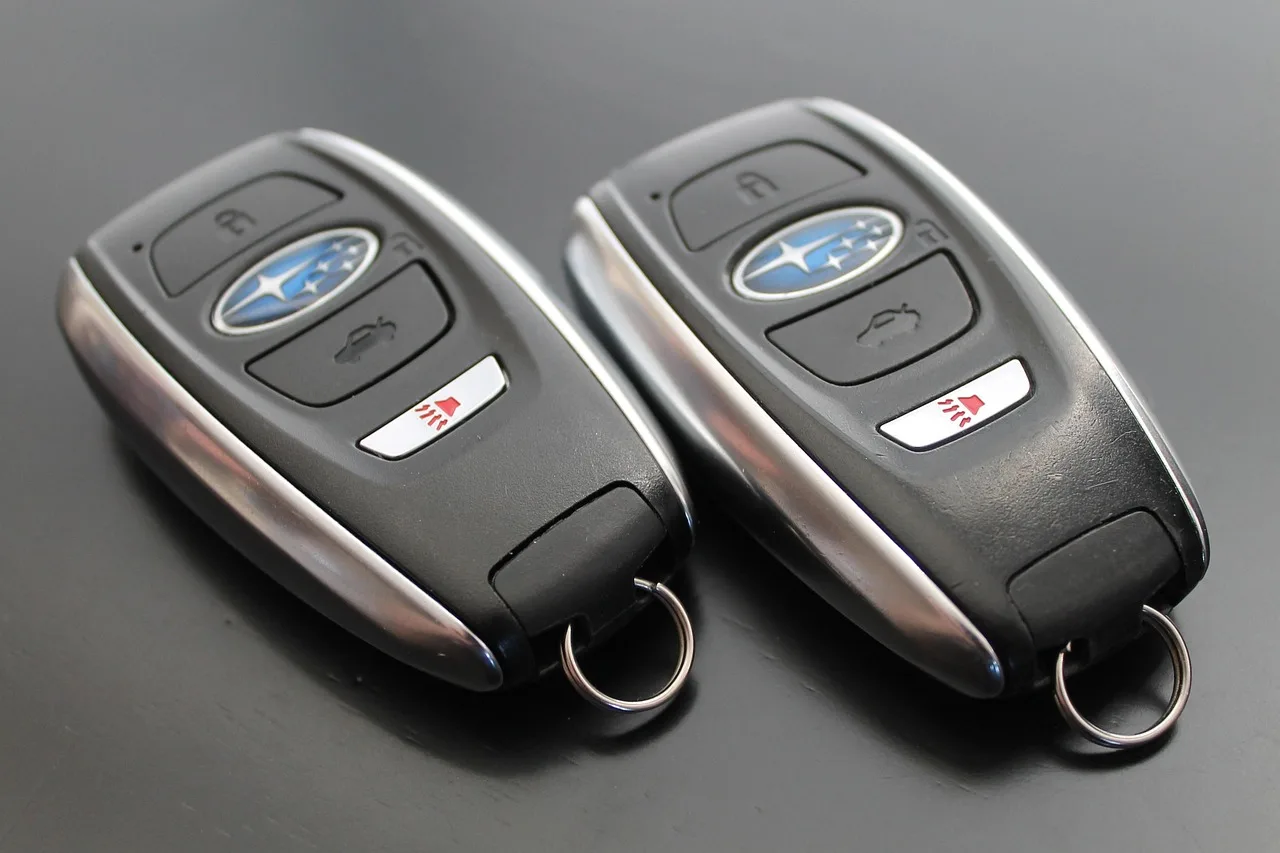
Key entry is the older, purely mechanical setup: you insert or turn a metal key in the door lock. Keyless entry is electronic access that checks permission before opening, often through a key fob, keypad-style credential, or phone-based access, and in cars it is often called a remote keyless system.
| Decision factor | Keyless entry | Key entry | Winner |
|---|---|---|---|
| Unlocking method | Uses a key fob or other electronic credential; some systems open by proximity or a button press. | Requires inserting or turning a metal key in the lock cylinder. | Keyless entry |
| Power dependence | Depends on battery-powered electronics in the fob and vehicle. | Does not depend on wireless communication or fob power. | Key entry |
| Failure mode | Can fail when the fob battery dies, the vehicle battery is weak, or the signal cannot be read. | Can fail if the lock cylinder wears out or the key is lost or damaged. | Key entry |
| Security exposure | Wireless signals can be blocked, and exchanged codes can potentially be intercepted. | Lower signal exposure because no wireless code is involved. | Key entry |
| Backup options | Some systems include a hidden physical key or override method. | Usually no electronic backup is needed. | Key entry |
| Best-fit driver use case | Drivers who want hands-free convenience and accept battery and signal dependence. | Drivers who want the simplest fail-safe door access. | Tie |
Unlocking method
Keyless entry wins on convenience because you can open the door without inserting a blade key. In many vehicles, the system works when the fob is nearby, and some doors open when you touch the handle. Key entry stays mechanical and direct.
Power dependence
Key entry wins here. A physical key does not depend on wireless communication, so it still works when the remote or vehicle battery-related electronics fail. Keyless entry needs power on both sides of the system.
Failure mode
Keyless entry has more ways to disappoint at the curb. A dead fob battery, weak vehicle battery, short range, or interference can stop the request from being read. Key entry is simpler, but a worn lock cylinder or a damaged key can still leave you stuck.
Security exposure
Key entry has less wireless exposure because there is no radio exchange to target. Keyless entry can be secure when the system design is strong, but wireless signals can be blocked and codes can potentially be intercepted. That is why model design and user habits matter.
Backup options
Many keyless entry vehicles still include a backup physical key for emergencies. Some also use a hidden override key slot or another emergency entry path. Key entry usually does not need a second access path because the key itself is the backup.
Best-fit driver use case
This row is a tie because the better choice depends on how you use the car. If you want the least complicated door access, key entry fits. If you value convenience at every stop, keyless entry fits better.
How does keyless entry work?
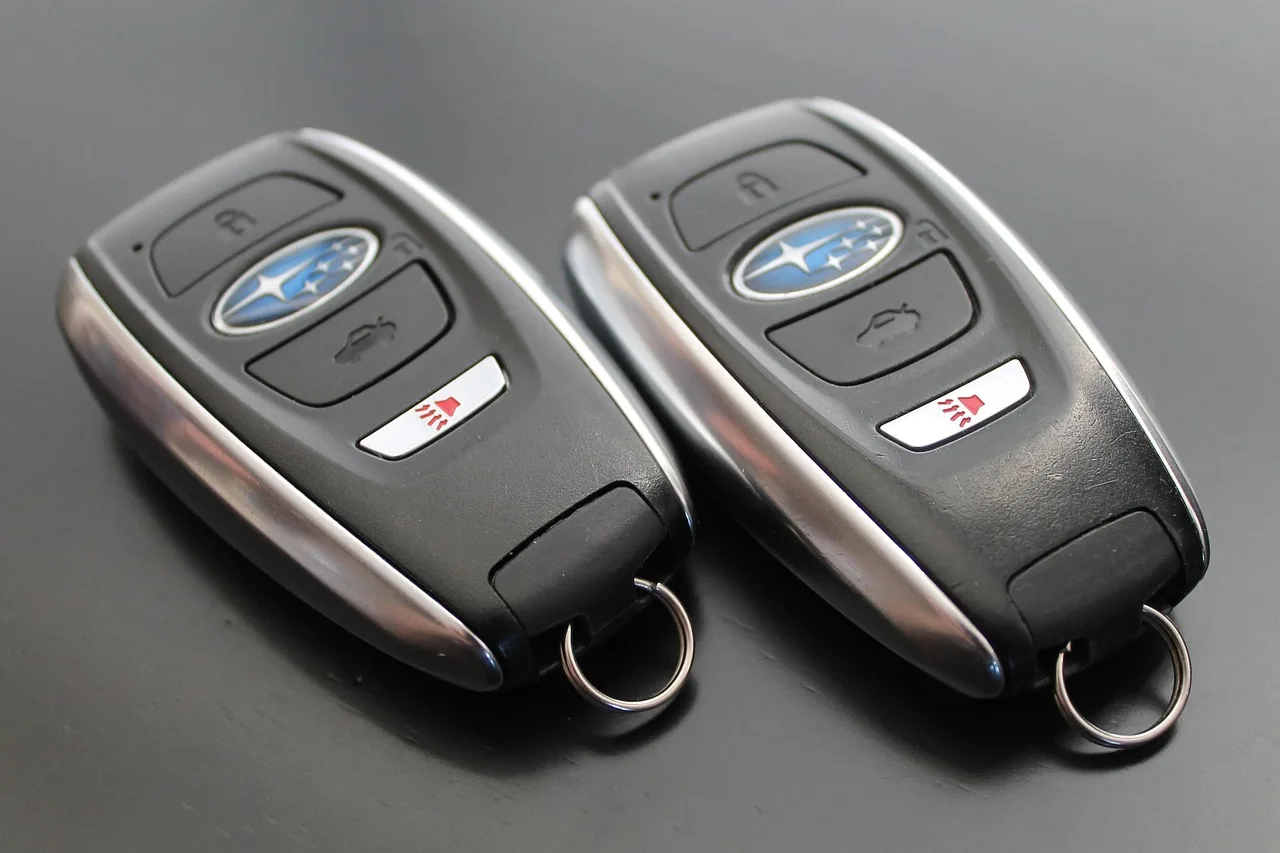
Keyless entry uses electronic authentication instead of a physical key. In cars, it is commonly a remote keyless system: the keyless fob contains identity chips that listen for radio signals from the car, and the car recognizes the code sent by the fob. Many systems use short-range transmitters.
Key fob signal and identity chip
A keyless fob contains an identity chip and communicates by radio signal. The fob sends a code the vehicle recognizes, which is why the car only opens for the correct credential. That is also why lost-fob replacement and programming can be more inconvenient than cutting a metal key.
Proximity opening and handle touch
Some systems open when the keyless fob is nearby, and some let you touch the door handle to trigger the response. Short range is normal, not a flaw. It is part of how the system limits when it listens and responds.
Say your fob is in a coat pocket and you stand within the car’s range at the driver door. The handle touch or proximity trigger may open the door without pressing the blade-key slot at all. Move a few feet farther away, and the same system may stop responding.
Backup physical key or override
Some keyless entry cars still include a backup physical key for emergencies. That matters when battery failure stops the electronic parts from checking permission or when the signal cannot be read. If the manual shows a hidden key blade or override slot, learn that location before you need it.
- Check the backup method. Open the owner manual and locate the emergency key blade, hidden key slot, or other override. The point is to know the access path before a dead battery turns a convenience feature into a lockout.
- Keep the spare accessible. Store the backup key where you can reach it quickly, not buried with luggage or inside the vehicle. If the fob battery dies, the backup only helps if you can get to it.
- Replace weak fob batteries early. If the car starts warning about the keyless fob or the range drops, replace the battery before the next trip. That reduces the chance of being stranded by a battery failure at the wrong time.
How does key entry work?
Key entry is mechanical and direct. You insert a metal key into the lock cylinder and turn it to open the door. It does not depend on wireless communication, so it keeps working even when the remote or vehicle battery-related electronics fail.
Mechanical lock and metal key
The advantage of key entry is plain: no radio link, no paired credential, and no battery in the key itself for opening the door. The lock cylinder and blade key are the only parts that matter for entry. That makes the system easy to understand and easy to use in an emergency.
Why it keeps working without wireless power
Because it is mechanical, key entry does not need the vehicle to be awake or the fob to have power. If the battery dies, you are not relying on an electronic handshake. That is the fail-safe argument for a traditional key.
Where failure still happens
Mechanical does not mean invincible. A bent key, a worn cylinder, or ice and debris in the lock can still prevent entry. The difference is that the failure is physical, not electronic, which is often easier to inspect and address.
Picture a winter morning with a weak car battery and a fob that will not respond. A keyless entry car may need its backup blade or an override path. A key entry door still opens with the metal key unless the lock itself is the problem.
Is keyless entry the same as push-button start?
No. Keyless entry opens the doors; push-button start starts the engine. A car can have one feature without the other, so you should not assume that a door system tells you anything about the ignition system. Check the window sticker or spec sheet for both features.
Opening versus starting the engine
Keyless entry is about access to the vehicle. Push-button start is about engine start authorization. Some vehicles pair them, but the pairing is not universal, and the terms should not be used as synonyms.
Vehicles that have one feature but not the other
Some models use a keyless door system with a traditional ignition key. Others use a blade key for the door and a separate electronic start feature. The feature list matters more than the trim badge.
What to check on a window sticker or spec sheet
Look for separate wording for door access and engine start. The spec sheet may say remote keyless system, passive entry, keyless access, or push-button start as separate items. That split tells you what you can and cannot expect from the car.
Security and failure modes
Keyless entry is convenient, but convenience depends on signal security, battery health, and range. Key entry avoids wireless interception risk, yet it gives up the ease of passive opening. The right choice depends on which failure you can tolerate more.
Signal interception and relay theft
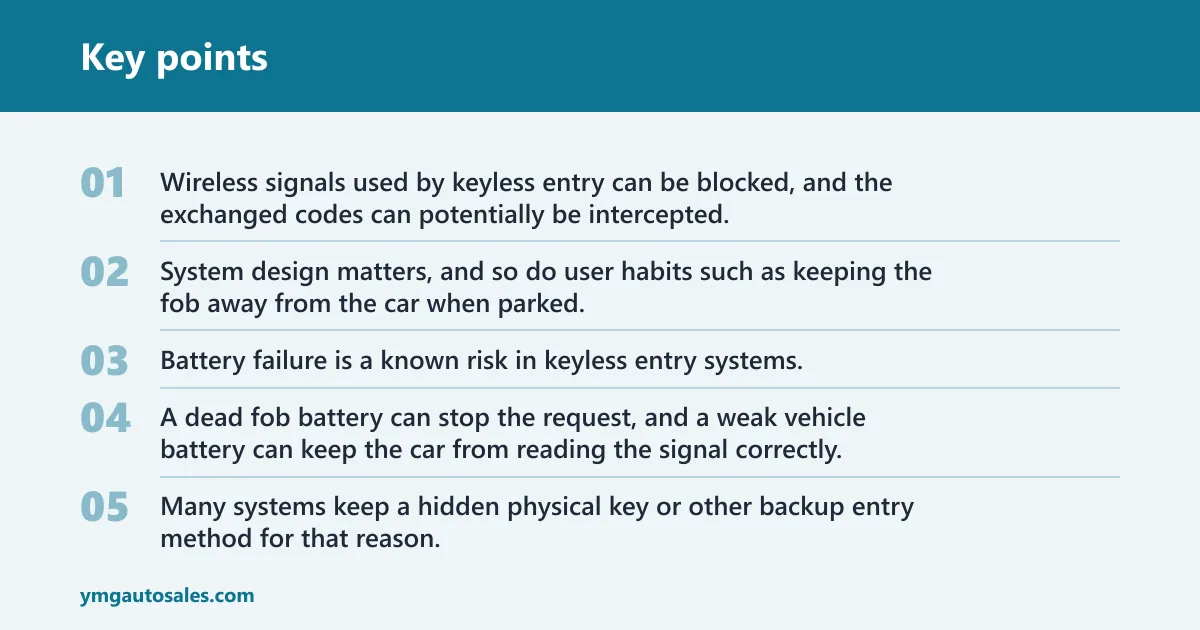
Wireless signals used by keyless entry can be blocked, and the exchanged codes can potentially be intercepted. That is the security tradeoff behind relay theft concerns. System design matters, and so do user habits such as keeping the fob away from the car when parked.
Dead fob battery and dead vehicle battery
Battery failure is a known risk in keyless entry systems. A dead fob battery can stop the request, and a weak vehicle battery can keep the car from reading the signal correctly. Many systems keep a hidden physical key or other backup entry method for that reason.
Short range, interference, and weak signals
Many vehicle keyless entry systems use short-range transmitters, so range limits are normal. If you stand too far away, the car may not see the fob. Interference from other electronics or the surroundings can also affect whether the code is read.
Suppose the car opens only when you are at the driver door, not from the sidewalk. That is normal short-range behavior, not a defect by itself. If the car refuses to open even at the door handle, the issue may be range, interference, or a low fob battery.
Choose Keyless entry if… / Choose key entry if…
Choose Keyless entry if you want quick access with your hands full, if your model includes a reliable backup physical key, and if you are comfortable managing fob batteries and occasional signal limits. It is also the better fit if you value proximity-based opening and a modern convenience setup.
Choose key entry if you want the simplest fail-safe door system, if you regularly park in places where wireless interference or battery problems would be annoying, or if you prefer a mechanical backup that works without radio communication. It is the safer pick when your top priority is plain, direct access with minimal dependence.
Frequently asked questions
What is the difference between keyless entry and key entry in a car?
Key entry uses a metal key that you insert or turn in a lock. Keyless entry uses electronic authentication, usually through a key fob that sends a radio signal the vehicle recognizes. The practical difference is mechanical simplicity versus wireless convenience and battery dependence.
Does keyless entry mean I can open the car without a physical key?
Usually yes for daily use, because the door can open with a fob, proximity trigger, or button press instead of a blade key. Some keyless entry systems still include a backup physical key for emergencies, so the physical key may still exist even if you rarely use it.
Can a keyless entry car still have a backup key?
Yes. Some keyless entry locks still include a physical key for emergencies, and that backup matters when the fob battery dies or the signal cannot be read. The exact storage point varies by model, so the owner manual is the place to check.
How does a keyless fob open a car door?
The fob contains an identity chip and sends a radio code the car recognizes. Many systems work at short range, and some open when the fob is nearby or when you touch the door handle. The vehicle checks permission electronically before opening.
What happens if the keyless entry battery dies?
If the fob battery dies, the car may not see the request. If the vehicle battery is weak, the system may also fail to read the signal. Many cars include a backup physical key or override method, which is why knowing the emergency entry path matters.
Are keyless entry systems more secure than regular keys?
Not automatically. Keyless entry can be secure, but it adds wireless exposure that a regular key does not have. Wireless signals can be blocked, and exchanged codes can potentially be intercepted, while a mechanical key avoids that signal path entirely.
Can someone intercept a keyless entry signal?
Yes, signal interception is a known concern because keyless entry relies on wireless communication. The risk depends on system design and user habits. That is why some drivers prefer to store the fob away from the car when parked and to use whatever anti-theft measures the model supports.
Do you need to press a button on a keyless fob?
Sometimes. Some systems open by proximity, while others use button presses on the fob. A few let you open the car by touching the handle when the fob is nearby, so the answer depends on the vehicle’s specific system rather than the label alone.